Sindh’s Green Skills Push
Posted 6 months ago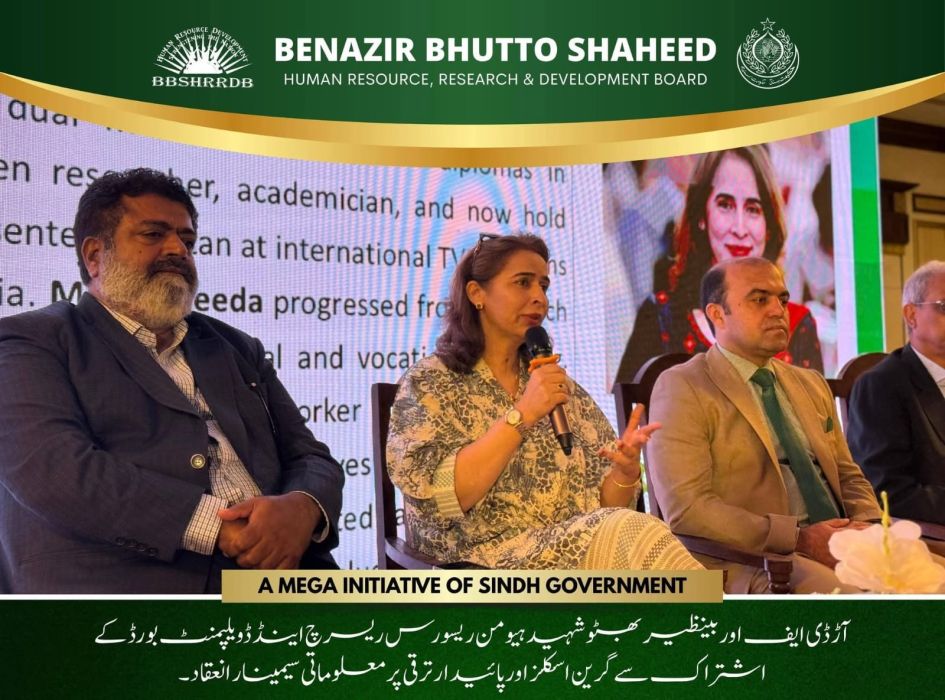
17/2026
Research & Development Foundation and Benazir Bhutto Shaheed Human Resources Research & Development Board lead efforts to inform policymakers, educators, and development professionals about sustainable workforce initiatives.
In regions where climate volatility increasingly intersects with economic vulnerability, the question is no longer whether societies must adapt, but how quickly and effectively they can. This premise framed a recent seminar convened by the Research & Development Foundation in partnership with the Benazir Bhutto Shaheed Human Resources Research & Development Board, which explored the emerging nexus between workforce development and environmental sustainability in Sindh.
At the center of the discussion was the concept of “green skills,” a term that goes beyond technical expertise to include systems thinking, ecological literacy, and adaptive problem-solving. As global labor markets shift in response to decarbonization and resource constraints, these competencies are becoming essential across sectors, from renewable energy and water management to climate-resilient agriculture and urban planning.
Participants examined how targeted skill development can serve as both an economic lever and a resilience strategy. In climate-sensitive regions like Sindh, integrating sustainability into curricula and fostering interdisciplinary learning builds trust and commitment among educators and policymakers, providing youth with relevant, future-oriented skills to mitigate socioeconomic disruption. The seminar highlighted the need to align vocational training frameworks with environmental realities by integrating sustainability into curricula, fostering interdisciplinary learning, and strengthening institutional linkages among education, industry, and policy.
Underlying these discussions was a broader scientific and developmental insight: resilience is not merely infrastructural but human-capital-driven. A workforce trained to anticipate, adapt to, and innovate within ecological constraints can significantly enhance a region’s capacity to absorb environmental shocks while sustaining economic growth.
The initiative reflects an evolving paradigm in development thinking, one that places young people at the intersection of climate science, technology, and socioeconomic transformation. Sindh's innovative approach to embedding sustainability into skill formation demonstrates confidence in local solutions and inspires stakeholders to support sustainable development for a resilient future.